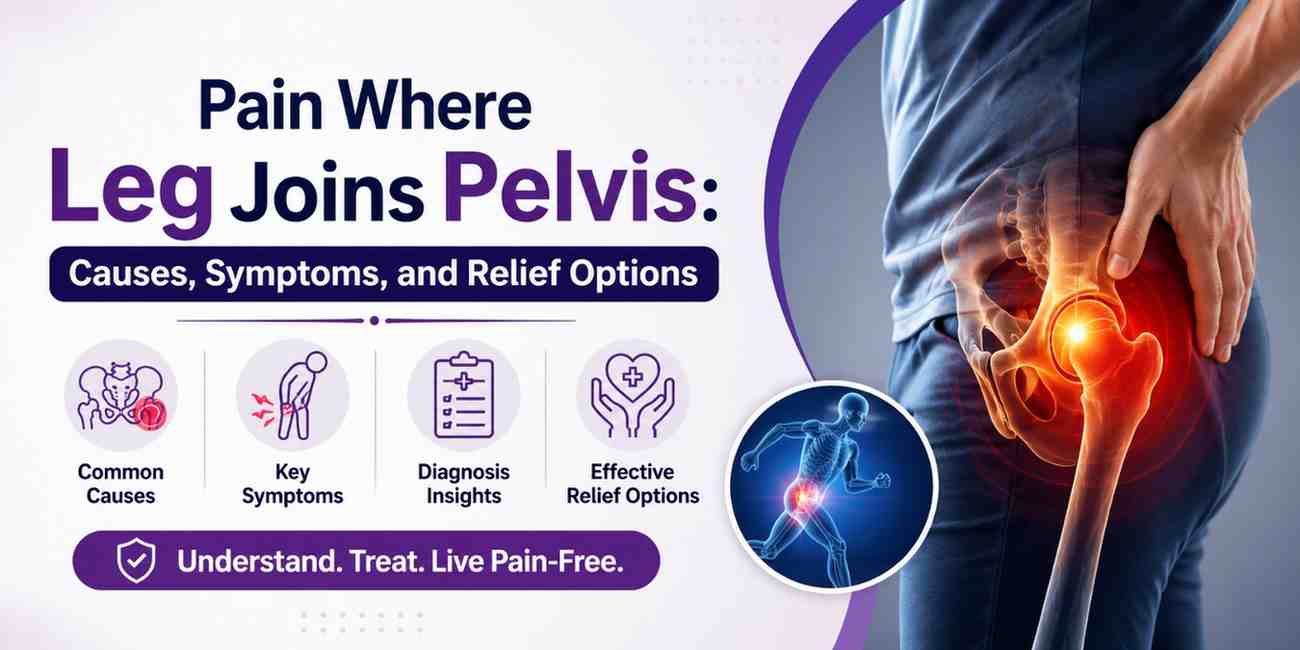
Pain where leg joins groin: Causes, Symptoms, and Treatment Options
Anyone can experience hip and groin pain, including pain where the leg joins the groin, regardless of age or lifestyle. This discomfort can make simple activities like walking, exercising, climbing stairs, bending, or getting out of bed harder. This discomfort can make simple activities like walking, exercising, climbing stairs, bending, or getting out of bed harder.Many people want to know why they feel pain near the hip joint, where the thigh meets the pelvis, or in the upper inner thigh. Some notice hip flexor or groin pain after being active or sitting for long periods. The hip joint, pelvis, groin, and upper thigh muscles are all linked, so pain in one area can affect another. Figuring out what’s causing the pain is the first step to finding the right treatment and preventing future issues.
What Causes Hip and Groin Pain?
Hip and groin pain can have many causes. Sometimes it starts in the muscles, and other times it comes from the hip joint itself.
Common causes include:-
- Groin muscle strain
- Hip flexor injury
- Joint stiffness
- Sports injuries
- Muscle overuse
- Poor posture
- Prolonged sitting
- Repetitive movements
- Age-related joint wear and tear
- Reduced flexibility
How severe your symptoms are usually depends on the cause of the pain and how long you’ve had it.
Pain Where the Thigh Meets the Pelvis: Common Reasons
Many people with hip discomfort experience pain at the junction of the thigh and pelvis. This area has several key muscles and tendons that help you move.
Common causes include:
- Groin muscle strain
- Hip flexor tightness
- Adductor muscle injury
- Tendon irritation
- Hip joint stiffness
People often feel pain during activities like:
- Walking
- Running
- Climbing stairs
- Standing after sitting
- Lifting the leg
If you ignore these symptoms, the pain may get worse and make movement harder over time.
Pain where the thigh meets the groin. Pain where the leg joins the groin
Pain where the thigh and groin meet is often linked to muscle strain or irritation in the muscles that connect the pelvis to the upper leg.
- This pain can get worse after sitting for a long time.
Athletes, runners, cyclists, and individuals involved in physically demanding work frequently experience this problem. When muscle pain returns often, many people try ways to feel better, such as using V1 Jointment for muscle strain, stiffness, and soreness after activity.
Groin and Upper Thigh Pain: Why It Happens
Groin and upper thigh pain often happen together because the inner thigh muscles attach near the pelvis and hip joint.
Common triggers include:
- Running
- Sports activities
- Gym workouts
- Sudden changes in direction
- Heavy lifting
- Repetitive movements
Symptoms may include:
- Tenderness in the inner thigh
- Pain while walking
- Difficulty changing direction
- Reduced flexibility
- Muscle tightness
Addressing these symptoms early can help reduce the risk of long-term movement problems.
Hip Flexor Pain Symptoms You Should Not Ignore
Your hip flexor muscles help you lift your knee and bend your hip.
If these muscles become tight, strained, or overused, they can cause a range of symptoms.
Common hip flexor pain symptoms include:
- Pain at the front of the hip
- Hip flexor pain in the groin area
- Difficulty lifting the leg
- Reduced flexibility
- Tightness after sitting
- Pain while walking uphill
- Discomfort during exercise
Hip flexor pain in the groin is especially common among office workers who sit for long periods and athletes who run or cycle. For muscle pain, many people include V1 Jointment in their routines to help them feel better after exercise, sports, or long periods of sitting.
Inner Thigh Pain Near the Groin
Inner thigh pain near the groin is often related to the adductor muscles, which move your legs inward and help keep your pelvis stable.
This type of discomfort may occur due to:
- Muscle strain
- Overstretching
- Athletic activity
- Repetitive movement
- Poor warm-up habits
Symptoms can range from mild tightness to real discomfort when you move.
People frequently experience:
- Tenderness near the groin
- Pain while walking
- Pain during exercise
- Difficulty bringing the legs together
- Reduced flexibility
If these symptoms return often, it’s important to stretch and give your muscles time to recover.
Pain Where the Thigh Meets the Groin: Why Does It Happen?
Pain at the junction of the thigh and groin is common among athletes, office workers, and older adults. This area has muscles, tendons, and ligaments connected to the hip joint, making it easy to strain or overuse.
The pain may occur due to:
- Groin muscle strain
- Hip flexor tightness
- Repetitive movements
- Sports injuries
- Joint stiffness
- Poor flexibility
Many people feel pain when walking, climbing stairs, getting into a car, or standing up after sitting for a long time. Addressing symptoms early can help prevent long-term movement problems.
Groin and Upper Thigh Pain: Common Causes and Symptoms
Groin and upper thigh pain often happen together because the upper thigh muscles connect near the groin and pelvis.
Common causes include:
- Muscle overuse
- Running injuries
- Sports-related strain
- Hip flexor irritation
- Adductor muscle injuries
- Joint stiffness
Symptoms may include tenderness, stiffness, reduced flexibility, pain during exercise, and discomfort when changing direction. Taking steps to support comfort after physical activity can help manage local muscle soreness.
Inner Thigh Pain Near the Groin: When Should You Be Concerned?
Inner thigh pain near the groin often comes from straining the adductor muscles. These muscles help keep your pelvis stable and support leg movement.
You may experience:
- Tenderness in the inner thigh
- Pain while walking
- Discomfort during exercise
- Difficulty bringing the legs together
- Reduced flexibility
If your symptoms worsen, persist for several weeks, or make daily activities difficult, you should see a doctor.
Groin Muscle Strain Symptoms
Groin muscle strain symptoms can vary depending on the severity of the injury.
Common symptoms include:
- Sharp pain in the groin region
- Pain where the thigh meets the groin
- Tenderness when touched
- Swelling
- Muscle weakness
- Pain during walking or running
- Difficulty changing direction quickly
Athletes, runners, football players, and gym enthusiasts are more likely to get groin muscle strains from sudden movements and repetitive strain. If you have muscle strain with tightness and soreness, stretching, changing your activity, and using products like V1 Jointment may help you feel better.
Hip Flexor Pain in the Groin Area
Hip flexor pain in the groin is a common reason for discomfort when you walk, exercise, or lift your leg. The hip flexor muscles connect your pelvis to your upper thigh and help you bend your hip and lift your knee.
Common symptoms include:
- Groin pain during movement
- Pain at the front of the hip
- Difficulty lifting the leg
- Tightness after sitting
- Reduced flexibility
- Pain while climbing stairs
If you keep having hip flexor pain in the groin, it’s important to stretch and support your muscles’ recovery. Many people use V1 Jointment for muscle support. For hip stiffness, some also use Rheumatica Oil, V-1 Tablets, and Rheumatica Gold Capsules as part of their joint wellness routine.
How to Relieve Hip and Groin Pain. A few lifestyle changes can help you recover and move more easily:tter:
Stretch: Gentle stretching can help relax tight hip flexors and groin muscles.
Avoid Prolonged Sitting
Sitting for long periods can tighten your hip flexors and reduce your mobility.
Stay Active
Regular movement helps keep your joints healthy.
Maintain a Healthy Weight
Carrying extra weight adds stress to your hips and pelvis.
Support Joint Mobility
If you feel stiff or uncomfortable, it’s important to keep your joints moving. Many people use stretching along with Rheumatica Oil, V-1 Tablets, and Rheumatica Gold Capsules for long-term wellness.
Final Thoughts
Groin pain near the hip, pain where the leg joins the groin, pain where the thigh meets the pelvis, upper thigh pain, and hip flexor pain can all result from muscle strain, reduced flexibility, repeated movement, or joint problems. Noticing symptoms early can help you avoid long-term movement problems. Regular exercise, stretching, good posture, and a healthy lifestyle all help. Some people also use Ayurvedic products like V1 Jointment for muscle pain, Rheumatica Oil for stiff hips, V-1 Tablets for mobility, and Rheumatica Gold Capsules for joint wellness as part of their routine.
Frequently Asked Questions (FAQs)
1. How to relieve hip and groin pain naturally?
Relieving hip and groin pain often depends on the underlying cause. Rest, gentle stretching, maintaining good posture, avoiding prolonged sitting, and regular physical activity may help improve comfort. For muscle-related discomfort, many individuals use V1 Jointment as part of their wellness routine, while Rheumatica Oil is commonly used during massage to support hip joint mobility and flexibility.
2. What causes pain in the groin and hip area in females?
Pain in the groin and hip area in females may result from muscle strain, hip flexor tightness, joint stiffness, overuse injuries, pregnancy-related changes, poor posture, or age-related wear and tear. In some cases, underlying hip joint conditions may also contribute to discomfort.
3. What causes pain in the groin and hip area in males?
Pain in the groin and hip area in males is commonly associated with muscle strain, sports injuries, repetitive movements, hip flexor problems, joint stiffness, or physical overexertion. Men involved in physically demanding work or athletic activities may be more prone to developing hip and groin discomfort.
4. What are the best hip and groin pain exercises?
Gentle stretching and strengthening exercises may help improve flexibility and support hip mobility. Common exercises include hip flexor stretches, groin stretches, glute strengthening exercises, walking, and low-impact mobility movements. However, exercises should be performed carefully, especially when pain is severe or persistent.
5. Why does my hip and groin pain come and go?
Hip and groin pain that comes and goes may be related to muscle tightness, joint stiffness, overuse, prolonged sitting, or repetitive movements. Symptoms often worsen after physical activity and improve with rest. Recurring discomfort may indicate an underlying mobility or joint health issue that requires attention.
6. What causes pain in the groin and hip area on the right side in females?
Right-sided hip and groin pain in females may be associated with muscle strain, hip joint irritation, ligament stress, posture-related problems, or pelvic conditions. The exact cause varies from person to person, making proper evaluation important when symptoms persist.
7. Why do some women experience lower back, hip, and groin pain together?
The lower back, hips, and pelvis are closely connected through muscles, ligaments, and joints. Poor posture, prolonged sitting, muscle imbalances, hip stiffness, or spinal issues may contribute to lower back, hip and groin pain in females. Supporting flexibility and maintaining good posture may help reduce strain on these areas.
8. What causes left hip and groin pain in females?
Left hip and groin pain in females may result from hip flexor strain, groin muscle injury, joint stiffness, overuse, or problems involving the muscles surrounding the pelvis. A healthcare professional should evaluate pain that interferes with walking, sleeping, or daily activities.
9. Can hip flexor pain cause groin pain?
Yes. The hip flexor muscles are located near the groin, and tightness or injury in these muscles may cause discomfort that radiates to the groin. Common hip flexor pain symptoms include stiffness, pain when lifting the leg, reduced flexibility, and discomfort while walking or climbing stairs.
10. What is the best treatment for recurring hip and groin pain?
Treatment depends on the underlying cause. Many people benefit from stretching, physical activity, posture correction, weight management, and supportive wellness products. For muscle discomfort, V1 Jointment may be used as part of a muscle-care routine. For hip joint stiffness and mobility concerns, many individuals incorporate Rheumatica Oil, V-1 Tablets, and Rheumatica Gold Capsules into their long-term wellness approach.
11. When should I see a doctor for hip and groin pain?
Medical evaluation is recommended if pain becomes severe, interferes with walking, follows an injury, causes significant stiffness, or persists for several weeks despite rest and self-care measures. Early diagnosis may help prevent further mobility issues.
12. Can sitting for long hours cause hip and groin pain?
Yes. Prolonged sitting may contribute to tight hip flexors, reduced mobility, muscle stiffness, and increased stress on the hip region. Taking regular movement breaks, stretching, and maintaining proper posture may help reduce discomfort and improve flexibility.